Sea Buckthorn: A Bright Orange Treasure of the Coast
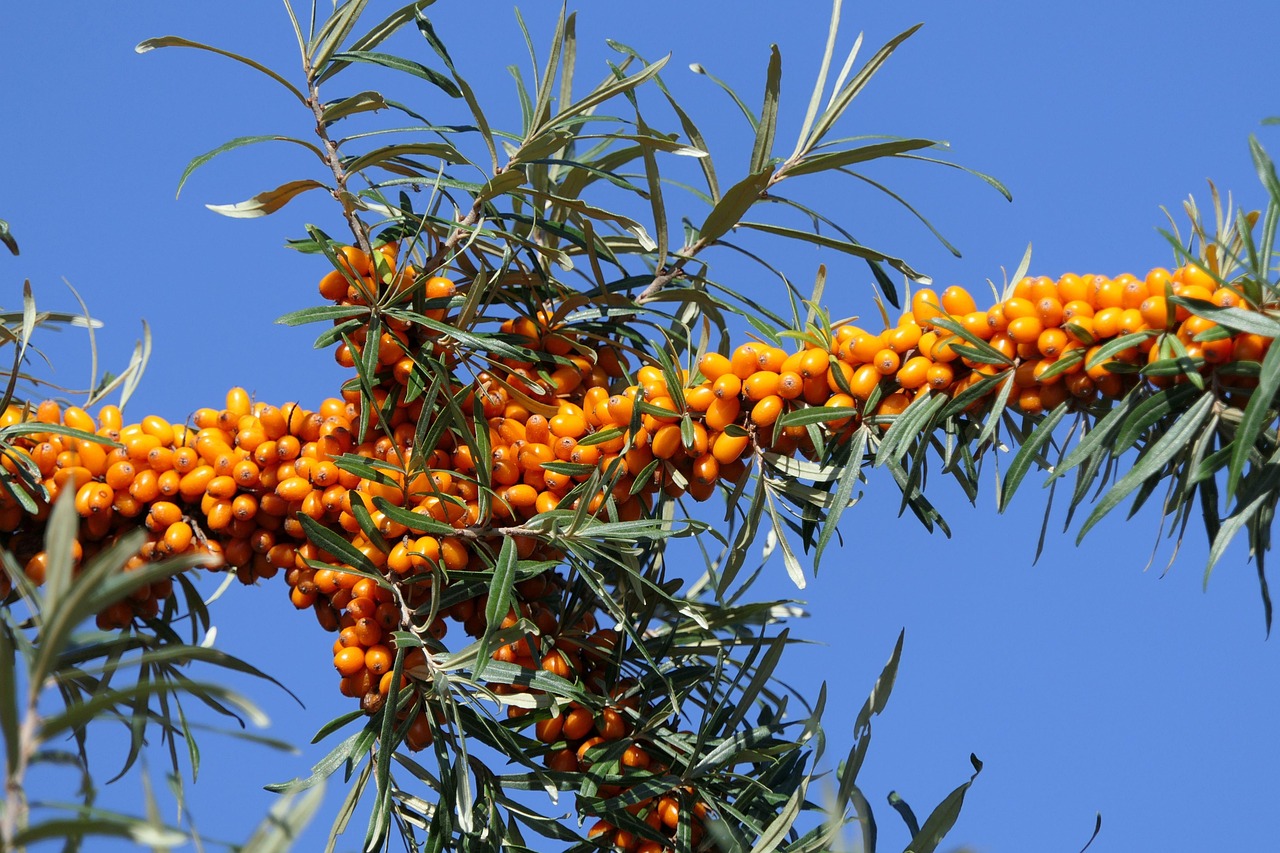
If you walk along a certain kind of coastline in autumn, you may notice bushes covered in small, bright orange berries, clustered so tightly they look almost like flames against the grey-green leaves. This is sea buckthorn, a plant that thrives on sand dunes and coastal edges, and its berries are one of the most intensely flavoured wild fruits you can find. They are sour, fruity, and faintly tropical, somewhere between passionfruit and citrus, and they make the most extraordinary sauces and drinks.
Sea buckthorn is a thorny shrub, and the berries grow close to the stems, which makes picking a slow and slightly prickly business. The traditional method is to cut whole branches and freeze them, then shake the berries off, but if you are picking for immediate use, you can simply pull the berries off one by one, accepting that your fingers will be stained orange. Wear gloves if you can, and old clothes, because the juice stains. The berries are ripe when they are fully orange and come away from the stem with a gentle tug. They will keep in the fridge for a few days, or you can freeze them for longer storage.
Making Sea Buckthorn Sauce and Cordial
Sea buckthorn sauce is a wonderful thing to have in the kitchen. It is sharp and fruity, and it cuts through rich meats beautifully. To make it, simmer the berries with a little water until they soften, then press them through a sieve to remove the seeds and skins. You will be left with a thick, bright orange purée. Add sugar to taste, and a little lemon juice if you like, and heat gently until the sugar dissolves. The sauce can be served warm or cold, and it keeps in the fridge for a week or so. It is excellent with roast pork, duck, or game, and it also works well with baked camembert or as a swirl through yoghurt.
For a cordial, cover the berries with water, bring to a simmer, and mash them lightly. Strain through a muslin, then measure the liquid and add half its volume in sugar. Heat gently until dissolved, then bottle. Diluted with still or sparkling water, it makes a refreshing drink that is tart and bright. You can also use it as a base for cocktails, or drizzle it over ice cream. Some people add a little sea buckthorn cordial to a glass of prosecco, which is a very good idea indeed.
Sea buckthorn curd is another lovely option. Cook the berries as above, strain, and then whisk the purée into a classic lemon curd base of eggs, sugar, and butter. The result is a vivid orange curd with a sharp, fruity edge that is wonderful on toast or in a tart.
Where to Find It and How to Pick Well
Sea buckthorn grows wild along many coasts, particularly on sand dunes and shingle beaches. It is also planted as a windbreak and for erosion control, so you may find it in places where it has been deliberately introduced. Before picking, check that you are allowed to forage on that land; some nature reserves and protected dunes are off limits, and it is always worth asking if you are unsure.
Pick only from bushes that are heavy with fruit, and leave plenty behind for the birds, who rely on the berries through the winter. The berries are best after the first frosts, when their flavour mellows slightly, though they are still very tart. If you are picking before frost, you can freeze them at home for a day or two to soften the sharpness.
Sea buckthorn is one of those wild foods that feels like a secret, even though it grows in plain sight along the coast. A jar of its sauce or cordial on the shelf is a reminder of salt air and autumn walks, and a bright spot in the darker months.